Pulsar Plus specs
| Brand | Wallbox |
|---|---|
| Released | 2021 |
| Max amperage | 48 A (6–48 A adjustable) |
| Max power | 11.5 kW at 240 V |
| Cable length | 25 ft |
| Connector | J1772 |
| Connector note | J1772 standard; NACS option available. (A 40 A / 10 kW plug-in model also exists; this review covers the 48 A.) |
| Install | Hardwired |
| Smart features | Wi-Fi + Bluetooth, myWallbox app (scheduling, energy monitoring, notifications, session history, remote lock), Alexa/Google voice, power sharing across up to 10 units, Power Boost load management |
| Outdoor rating | NEMA 4, indoor/outdoor rated |
| Warranty | 3 years |
| Price tier | $$$ Premium ($550–$750). See Amazon for today's price. |
- The 48 A model is hardwired only; the 40 A model offers a NEMA 14-50 plug.
- 48A J1772 hardwired ASIN B0DJHDY4JY (NACS variant is a separate listing).
- Remarkably compact: 7.8 x 7.9 x 3.9 in, 4.4 lb. Assembled in USA.
Specs are compiled from manufacturer listings and may change between production runs. Confirm on the retailer page before buying.
The Wallbox Pulsar Plus is the compact-premium pick: a 48-amp / 11.5 kW charger the size of a sandwich, with multi-unit power sharing (up to 10 units) that nobody else matches. One-line verdict: at ~$650–$800 it’s the priciest unit in this roundup — you’re paying for the form factor and the smarts, not the electrons, so it only makes sense for design-conscious or multi-EV households.
Key specs in context
48 amps / 11.5 kW — same ceiling as chargers costing half as much. Roughly 35–44 miles of range per hour depending on the vehicle; empty-to-full overnight. Let’s be direct: a $400 EVIQO moves the same electrons. The Pulsar Plus premium buys everything around the power — size, software, sharing intelligence, voice control. If that sentence doesn’t excite you, stop here and buy the cheaper charger. Verify the speed for your car with our charge time calculator.
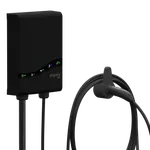
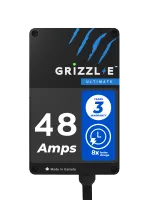
7.8 × 7.9 × 3.9 inches, 4.4 lb — the smallest 48-amp charger here, by far. This is the reason the Pulsar Plus exists. Most 48-amp chargers are chunky wall boxes; the Pulsar Plus is closer to a thick paperback. On a finished garage wall, a small condo parking spot, or anywhere aesthetics matter, it visually disappears where a Grizzl-E looks like industrial equipment. Assembled in the USA, UL listed — the small size doesn’t mean cut corners.
Power sharing across up to 10 units + Power Boost. This is the most sophisticated multi-charger coordination in the roundup: up to ten Pulsar Plus units can share limited electrical capacity, splitting current automatically, while Power Boost does whole-home load management (dialing charging back when the house needs the power). For a three-EV household on a constrained panel, this is genuinely the best-engineered answer. For one car, it’s capability you’ll never touch.
25-foot cable, J1772 standard with NACS option, 6–48 A adjustable. Full reach, your choice of connector (see our NACS vs J1772 explainer), and fine-grained amperage to fit tight panels — check yours with our panel capacity checker.
Installation
Hardwired only at 48 amps — a licensed electrician lands it on a dedicated 60-amp breaker for full output. The 40-amp model offers a NEMA 14-50 plug-in if you need it. The small size is an install advantage in tight spots: it fits where bigger boxes won’t, and the light weight makes one-person mounting easy. Price the electrician work with our installation cost guide (federal tax credit included) and compare approaches in our hardwired vs plug-in guide. NEMA 4 rated, so exterior installs are fine.
Smart features & app
The myWallbox app covers scheduling, energy monitoring, notifications, session history, and remote lock (disable charging when you’re away — useful for shared parking), plus Alexa/Google voice control and offline-capable charger intelligence. The honest history: early-2024 firmware and app issues earned the brand some rough reviews, and Wallbox has fixed them via over-the-air updates — 2025–2026 feedback skews notably more positive. But software remains the brand’s historical weak spot versus Tesla or ChargePoint; the hardware is the safer part of the bet. If app polish is your top criterion, the Tesla Universal Wall Connector is cheaper and better on software.
Where the Pulsar Plus quietly wins: shared and visible installs. The remote-lock feature (disable the charger from the app) matters in condo garages and shared driveways where anyone could plug in on your dime. And the tiny footprint isn’t just aesthetics — in tight parking spots with the charger mounted at bumper height, a 4.4-lb box is simply less of an obstacle than a 15-lb one. These are the details that justify the premium for apartment and condo dwellers, not just design enthusiasts.
How it compares
Versus the Autel MaxiCharger AC Home: the Autel gives you 50 amps and denser connectivity (Ethernet!) for less money, but can’t match the Pulsar’s size or 10-unit sharing. Tech-maximalist with one car: Autel. Design-conscious or multi-EV: Wallbox.
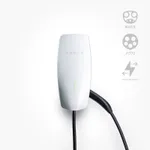
Versus the Tesla Universal Wall Connector: the Tesla is ~$100–$250 cheaper with a better app and the Magic Dock dual connector, but it’s bigger and caps sharing at six units. Mixed-connector garage: Tesla. Tiny footprint or 10-unit sharing: Wallbox.
Versus the Emporia Pro: both do whole-home load management, but the Emporia bundles the panel monitor explicitly to avoid a panel upgrade — the more direct solution to a constrained panel — and costs less. The Wallbox counters with size and deeper multi-unit sharing.
Bottom line
The Pulsar Plus is the charger you buy when the charger itself has to look good and think hard: smallest 48-amp footprint here, 10-unit power sharing nobody else offers, voice control, and Power Boost load management — for ~$650–$800 (check the current price; it moves). It’s the priciest pick because the premium is design and intelligence, not power. One EV, no aesthetic constraints, tight budget? The EVIQO Gen 2 moves the same electrons for nearly half. Multi-EV household or a garage where the box is visible? This is the one.
Accessories for the Pulsar Plus
Useful add-ons for your install, sold on Amazon. An adapter in the frunk covers you for mixed-connector situations.
- Connector adapterTesla SAE J1772 charging adapterOfficial Tesla
Tesla's official J1772-to-NACS adapter lets any Tesla charge from a J1772 charger like the Grizzl-E or ChargePoint J1772. Small, and it lives in the frunk.
- NEMA 14-50 outletHubbell HBL9450A NEMA 14-50 receptacleUniversal fit
The industrial-grade 14-50 outlet electricians recommend for EV charging: solid brass contacts that won't overheat under a continuous 40A load, unlike cheap dryer outlets.
- NEMA 14-50 outletBryant 9450FR NEMA 14-50 receptacleUniversal fit
Hubbell's sister brand at a lower price with the same heavy-duty internals. A solid second choice for a plug-in install.
- Connector adapterLectron J1772 to Tesla NACS adapterUniversal fit
A popular third-party J1772-to-NACS adapter rated for 48A/60A, handy if your J1772 charger didn't come with one. Match the adapter's amp rating to your charger.
Compatibility checked October 2026. More in our accessories guide.