Tesla Wall Connector vs ChargePoint Home Flex vs Grizzl-E (2026)
Our top picks
 9.2Price tier: Premium, $550–$750Check price on Amazon
 9.0Price tier: Mid-range, $350–$550Check price
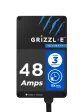 8.7Price tier: Mid-range, $350–$550Check price
Three brands dominate home EV charging conversations — Tesla, ChargePoint, and Grizzl-E — and they represent three genuinely different philosophies: the polished ecosystem play, the power-and-network play, and the tough-value play. Here’s how they actually compare, with the specific models that matter in 2026.
At a glance
| Tesla Wall Connector / Universal | ChargePoint Home Flex | Grizzl-E Ultimate 48A / Classic | |
|---|---|---|---|
| Max power | 48 A / 11.5 kW | 50 A / 12 kW | 48 A / 11.5 kW (Ultimate); 40 A / 9.6 kW (Classic) |
| Connector | NACS (std) / NACS+J1772 (Universal) | J1772 or NACS variant | J1772 or NACS (Ultimate); J1772 only (Classic) |
| Install | Hardwired only | Plug-in or hardwired | Hardwired (Ultimate); plug-in (Classic) |
| Cable | 24 ft | 23 ft | 25 ft (Ultimate); 24 ft (Classic) |
| App | Best in class (Tesla app) | Great + public network | Good (Ultimate); none (Classic) |
| Warranty | 4 years | 3 years | 3 years |
| Street price | ~$440–$600 | ~$500–$600 | ~$480–$650 (Ultimate); ~$300–$450 (Classic) |
All three make a 48-amp-class charger, so raw speed doesn’t decide this — the differences are connector strategy, software, install flexibility, and build.
Tesla: the default for Tesla households
The Wall Connector ($440–$475) and Universal Wall Connector ($550–$600) share the best app in the category — scheduling, energy monitoring, charge history, over-the-air updates — plus power-sharing for up to 6 units and a 4-year warranty, the longest here. The 24 ft cable is slim and easy to handle, and the units are ENERGY STAR certified.
The Universal’s integrated Magic Dock is the standout feature in this entire comparison: a J1772 adapter nested inside the NACS handle, so the charger natively serves any EV with no separate adapter to buy or lose. For a mixed or transitional garage, it’s the only charger of the three I’d call future-proof — see our NACS vs J1772 explainer for why that matters in 2026.
Weaknesses: hardwired only (budget for a full electrician install — our cost guide has the numbers), NACS-only on the standard model, and the app’s non-Tesla features are thinner than ChargePoint’s or Emporia’s. Full reviews: Universal · standard.
ChargePoint: the power and flexibility play
The Home Flex is the only one of the three with a plug-in option and the fastest output: 50 A / 12 kW hardwired (40 A on the NEMA 14-50 plug). Its killer feature is the network — the same app that schedules your home charging also finds and pays for 274,000+ public ChargePoint stations, with unified energy and cost tracking. If you road-trip on public charging, no other app consolidates home and road this well.
It’s also the most rebate-friendly of the three: networked ChargePoint units show up on utility approved lists often, which matters if your utility’s program requires specific models (check before you buy — our rebates guide covers the gotchas). You choose J1772 or NACS at purchase, though they’re separate listings, so confirm the connector on the page.
Weaknesses: the highest typical price of the three for the core unit (~$500–$600 street, though deal prices near ~$400 surface), Wi-Fi setup can be fiddly per owner reports, and the 23 ft cable runs a foot shorter than Tesla’s and Grizzl-E’s. Full review.
Grizzl-E: the tough value play
The Ultimate 48A matches Tesla’s 48 A / 11.5 kW in a cast-aluminum NEMA 4X / IP67 enclosure — the toughest box in this comparison, UL tested, built in Canada — for less money than either competitor, with your choice of J1772 or native NACS. It has a real app (scheduling, energy stats, remote control, load balancing across units) and the longest cable here at 25 ft. The Classic drops the app entirely and the price to ~$300–$450: a UL-listed, DIP-switch-adjustable 40 A tank for buyers who want the toughest cheap charger and couldn’t care less about software.
Weaknesses: hardwired-only on the Ultimate (the Classic is plug-in), a smaller support network than Tesla or ChargePoint, a thinner app ecosystem, and J1772-only on the Classic — new-EV buyers need to plan for an adapter. Full reviews: Ultimate · Classic.
Head-to-head: the decisions that split them
Connector strategy. Tesla: NACS-only standard, dual-connector Universal. ChargePoint: pick J1772 or NACS at purchase. Grizzl-E: buyer’s choice on the Ultimate, J1772-only on the Classic. Mixed garage with no appetite for adapters? Universal. Otherwise, match your cars — our connector explainer maps every option.
Install. Only ChargePoint and the Grizzl-E Classic offer plug-in. If you’re renting, might move, or want the cheapest install, that eliminates both Teslas and the Ultimate immediately. Our hardwired vs plug-in guide has the full trade-off table.
Software. Tesla’s app is the most polished; ChargePoint’s is the most useful for road-trippers; Grizzl-E’s Ultimate app is good but a tier below, and the Classic has none by design. If you’ll never open an app, stop paying for one — the Classic exists for you.
Two-EV households. The Grizzl-E Duo (~$800–$1,000) charges two cars from one 50-amp circuit with automatic load balancing — roughly half the cost of two chargers plus panel work. Tesla counters with power-sharing across up to 6 individually-circuited Wall Connectors, which is more flexible but far pricier.
Verdict
- Tesla household: Tesla Wall Connector — or the Universal if a non-Tesla might ever visit. Best app, best warranty, lowest Tesla price.
- Mixed EVs / road-tripper: ChargePoint Home Flex. Most power, most install flexibility, one app for home and 274,000+ public stations.
- Toughness and value: Grizzl-E Ultimate 48A — or the Classic if you don’t want an app. The best-built cheap chargers you can buy.
And if none of these three is quite right: the EVIQO Gen 2 undercuts them all at ~$400 street with full 48 A smart charging, and the Emporia Pro is the answer when your panel can’t support the circuit these three want. The Autel MaxiCharger AC Home is worth a look too if you want the densest smart-charging feature set of any home unit. The full 2026 ranking scores all 11 head-to-head.