Updated October 2026

The best Level 2 EV chargers of 2026, ranked.

We compared 11 home chargers on power, connector, install flexibility, smarts and price — including the 2026 NACS transition — so you can skip the research and start charging faster.

11chargers compared
8brands compared
48 Aour recommended sweet spot
Editor's picks

The 4 EV chargers we'd buy in 2026

One clear winner for each kind of buyer. Tap a card for the full review.

Full ranking →
Best smart charger
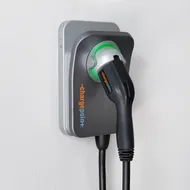
ChargePoint Home Flex
  • 50 A · 12 kW
  • 23 ft cable
  • J1772
  • 48 A+

The premium smart-charger pick for drivers who also use ChargePoint's public network — one app for home and road.

  • Fastest mainstream home charger: 50 A / 12 kW
  • Plug-in or hardwired — your choice at purchase
  • Same app as 274,000+ public ChargePoint stations
  • Premium price over simpler 48–50 A options
Price tier: Mid-rangetoday's price on Amazon
Best value
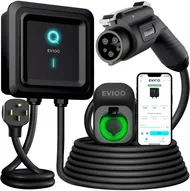
EVIQO Level 2 EV Charger (Gen 2)
  • 48 A · 11.5 kW
  • 25 ft cable
  • J1772
  • 48 A+

The sleeper value pick — full 48 A smart charging with top-tier weather sealing for well under $450 street.

  • Full 48 A / 11.5 kW for ~$400 street
  • NEMA 4 / IP66 — best weather rating here
  • Standout owner ratings (4.8 stars, 1,500+ ratings on Amazon)
  • App gets mixed reviews ('great hardware, not so great app' — MotorTrend)
Price tier: Mid-rangetoday's price on Amazon
Best budget
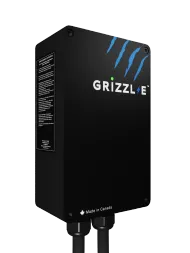
Grizzl-E Classic
  • 40 A · 9.6 kW
  • 24 ft cable
  • J1772

Maximum durability at minimum price — the value champion for buyers who don't need an app.

  • Best-built sub-$400 charger: UL listed, made in Canada
  • Tank-like metal housing (survived an ATV on a frozen lake, per EnergySage)
  • DIP-switch amperage adjustment — rare at this price
  • No Wi-Fi or app on the base model
Price tier: Budgettoday's price on Amazon

Swipe for more picks →

30-second matcher

How fast could you charge at home?

Tell us your battery size and we'll show charge times, miles per hour, and the chargers that deliver.

Your EV's battery size?
Start here

EV charging, explained

All guides →

The 2026 connector transition, explained — and which to buy.

Top pickUniversal Wall ConnectorCheck price
Read the guide

Which install type fits your home, panel, and plans.

Top pickHome FlexCheck price
Read the guide

What the electrician costs, plus utility rebates to check.

Top pickProCheck price
Read the guide

Amperage, panel capacity, and smart features — without overbuying.

Top pickUniversal Wall ConnectorCheck price
Read the guide

The three big names, head to head.

Top pickUniversal Wall ConnectorCheck price
Read the guide

All 11 chargers ranked, with the reasoning shown.

Top pickUniversal Wall ConnectorCheck price
Read the guide
Side by side

Highest-rated chargers at a glance

Compare all 11 →
ModelScoreMax ampsMax kWCableConnectorInstallPrice tierBuy
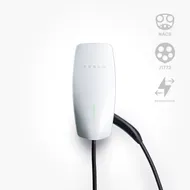
Tesla Universal Wall Connector9.248 A11.5 kW24 ftNACS + J1772HardwiredPrice tier: PremiumCheck price of the Tesla Universal Wall Connector on Amazon
ChargePoint Home Flex9.050 A12 kW23 ftJ1772Hardwired or NEMA 14-50 plugPrice tier: Mid-rangeCheck price of the ChargePoint Home Flex on Amazon
Tesla Wall Connector (Gen 3)8.948 A11.5 kW24 ftNACSHardwiredPrice tier: Mid-rangeCheck price of the Tesla Wall Connector (Gen 3) on Amazon
Emporia Pro EV Charger8.848 A11.5 kW25 ftJ1772Hardwired or NEMA 14-50 plugPrice tier: PremiumCheck price of the Emporia Pro EV Charger on Amazon
Grizzl-E Ultimate 48A8.748 A11.5 kW25 ftJ1772HardwiredPrice tier: Mid-rangeCheck price of the Grizzl-E Ultimate 48A on Amazon
Autel MaxiCharger AC Home8.750 A12 kW25 ftJ1772Hardwired or NEMA 14-50 plugPrice tier: Mid-rangeCheck price of the Autel MaxiCharger AC Home on Amazon
Free tools

Don't guess. Calculate.

All tools →
Buying advice

Comparisons & guides

All guides →

Can You Use an Extension Cord With an EV Charger? The Safety Answer for Level 1 and Level 2

Can you use an extension cord with an EV charger? Why standard cords fail under continuous load, wall-side vs J1772 cables, and safer ways to get reach.

Best EV Charger for a Plug-In Hybrid: Why 32 Amps Is Usually Plenty (2026)

The best EV charger for a plug-in hybrid is usually a 32-amp Level 2 unit. PHEV onboard chargers cap at 3.3-7.7 kW, so 48 amps adds no speed. How to choose.

How to Use Time-of-Use Rates and Smart EV Charger Scheduling to Cut Your Winter Charging Bill

How time-of-use rates and smart EV charger scheduling cut your winter charging bill: setup steps, an illustrative cost example, and which chargers help.

Tesla Wall Connector vs Universal Wall Connector: Which to Buy Now?

Tesla Wall Connector (Gen 3) vs Universal Wall Connector: what the built-in J1772 handle changes, and a decision guide for Tesla-only, J1772 and mixed households.

Do I Need a Panel Upgrade for an EV Charger? (2026): Usually Not, and How to Tell

Most homes do not need an electrical panel upgrade for a Level 2 EV charger. Here is how the 125% rule and a load calculation decide it, and what to do if your panel is tight.

EV Charging in Cold Weather (2026): Slower Charging, Range Loss, Preconditioning, and the Best Home Chargers for Winter

Why EV charging and range suffer in the cold, how preconditioning and a home Level 2 charger help, and what to check on a charger's weather rating and cable for winter.

Research you can actually check.

How we score chargers
01

NACS transition covered

Every charger rated on connector future-proofing for the 2026 NACS switchover.

02

Specs, cross-checked

Amperage, cable length and connector options verified across manufacturers, reviews and owner reports.

03

Tools, not just words

Calculators built from real specs turn "which charger?" into a number, not a guess.

EV charger FAQ

What is the best Level 2 EV charger in 2026?
Our top-rated pick overall is the Tesla Universal Wall Connector: 48 A / 11.5 kW with the only integrated NACS + J1772 connector, so it charges any EV. Tesla-only households can save with the standard Wall Connector; value buyers should look at the EVIQO Gen 2.
How many amps do I need for home EV charging?
40–48 amps covers virtually everyone. 40 A adds ~30 miles of range per hour; 48 A adds ~35–44. Overnight, even 32 A refills most daily driving. A 48-amp charger needs a dedicated 60-amp breaker.
Should I buy a NACS or J1772 charger?
NACS for Teslas and 2025+ EVs (native NACS ports); J1772 still works natively for older non-Tesla EVs. Dual-connector chargers like the Tesla Universal Wall Connector sidestep the choice entirely.
How much does Level 2 charger installation cost?
The charger runs ~$350–$600; a straightforward electrician install adds $300–$800. Long wire runs or panel upgrades push the total to $1,200–$2,500+. The federal 30C tax credit ended June 30, 2026, so check your utility for rebates before you buy.