Do I Need a Panel Upgrade for an EV Charger? (2026): Usually Not, and How to Tell
Our top picks
 Load management option for tight panels - an electrician’s load calculation decidesEmporia Pro EV Charger48 A · 11.5 kW · 25 ft · J17728.8Price tier: PremiumCheck price on Amazon
 6-48 A adjustable in 1 A steps, hardwired or plug-inEVIQO Level 2 EV Charger (Gen 2)48 A · 11.5 kW · 25 ft · J17728.6Price tier: Mid-rangeCheck price
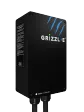 16-40 A DIP switches, plug-in, lets you match a smaller circuitGrizzl-E Classic40 A · 9.6 kW · 24 ft · J17728.4Price tier: BudgetCheck price
 9.0Price tier: Mid-rangeCheck price
Do you need an electrical panel upgrade for a home EV charger? SMUD’s EV charging panel fact sheet says an upgrade is most often not necessary. That is SMUD’s general guidance, not an assurance about your panel. What decides it is how much spare capacity your panel and service have after everything else in the house is counted, and how big a circuit your charger needs. This guide explains how to think about that, walks through three common home types, and covers the options if your panel turns out to be tight.
This is general information, not a substitute for a licensed electrician. Only a load calculation on your own home can say whether you need an upgrade, and local codes and permit rules vary. The NEC edition adopted and any local amendments vary by jurisdiction, and the licensed electrician pulling the permit applies the rules in force locally. NEC 220.87 is one accepted load-calculation method, and the electrician may use another permitted method.
We list no charger prices here, so check today’s price before you buy. We have no verified source for panel-upgrade or electrician pricing, so we give none. Ask for written quotes.
Why a panel upgrade is usually not needed
This section reflects SMUD’s general guidance. It is not an assurance for any specific panel, and only a load calculation on your own home can settle it.
Most households charge overnight, when the rest of the house is drawing little. The ones that need more capacity are the ones that try to add a large, continuous load on top of a panel that is already close to its limit.
SMUD’s fact sheet makes two points that frame the whole question. First, it says an upgrade is most often not necessary. Second, the odds go up with higher-amperage chargers. That is the practical lesson: the bigger the circuit you ask for, the more likely you are to run out of room. A charger that suits your daily driving at a modest amperage is much less likely to trigger an upgrade than the biggest unit you can find.
Our guide to choosing a Level 2 charger starts with the panel for exactly this reason. Looking at what your car needs and what your panel can offer comes before looking at chargers.
How much circuit does an EV charger need?
NYSERDA’s overview of NEC Article 625 explains that EV charging is treated as continuous duty, and that overcurrent protection is rated at 125% of the load. In plain terms, the breaker has to be sized 25% above the charger’s output, because a car can pull its full current for hours.
| Charger output | Circuit rating (NYSERDA, NEC Article 625) | Examples in our data |
|---|---|---|
| 40 A | 50 A | Grizzl-E Classic |
| 48 A | 60 A | Tesla Universal Wall Connector, EVIQO Gen 2, Emporia Pro |
That is the number that matters for your panel. A 48 A charger asks for a 60 A circuit, which is a large share of a 100 A panel. A 40 A charger asks for 50 A. The ChargePoint Home Flex goes up to 50 A in our data, so it can ask for more still, though like most chargers in this guide it can be set lower. Our breaker sizing guide covers wire gauge, breaker types and GFCI rules once you know the amperage.
The circuit rating is not the same as the load your panel sees in real life, but the electrician’s calculation starts from it. That is why choosing a lower amperage can change the answer.
How do you know if your panel has room?
The answer is a load calculation, and your electrician has two broad ways to do it. One adds up the home’s loads on paper. The other uses real data from the utility.
The DOE BENEFIT factsheet on home electrification and panel upgrades describes the second route. NEC 220.87 lets an electrician use utility records, specifically the maximum annual demand multiplied by 125% and divided by 240 V, to find the existing load in amps. The new charger’s load is then added, and the total is compared with the service rating. If the total fits, no upgrade is needed. If it does not, the factsheet says alternatives to an upgrade exist.
To see the arithmetic, here is a made-up example. It is not a source figure and is not a prediction for your home. Suppose utility records showed a maximum demand of 12,000 watts. Multiplied by 125% that is 15,000 watts, and divided by 240 V that is 62.5 A of existing load. A 60 A circuit for a 48 A charger would bring the total to 122.5 A, which is over a 100 A service. A charger set to 24 A would need a 30 A circuit by the same 125% rule, for a total of 92.5 A, which fits. Same house, same panel, different answer, depending on the charger setting. Your home’s real numbers will differ, which is why the calculation matters.
The DOE factsheet also gives context on the service itself. It says the NEC requires a service panel of at least 100 amps, that many older homes have 100 A, and that newer homes often have 200 A. Those three facts shape the scenarios below.
Scenario 1: a 100 A panel with an electric range and dryer
This is the case that most often prompts the question. A 100 A panel with a range and a dryer on 240 V circuits already has two heavy loads, and a continuous EV load on top can make the calculation tight.
Three things work in your favor:
- Timing. The dryer and range usually run in the evening and not overnight, when most EV charging happens. A utility-record calculation under NEC 220.87 reflects what the home really draws, as the DOE factsheet describes, not just the nameplate ratings of every appliance.
- Amperage choice. As the table shows, a 40 A charger needs a 50 A circuit and a 48 A charger needs a 60 A one. SMUD says higher-amperage chargers raise the likelihood of an upgrade, so stepping down can be enough.
- Sharing the dryer circuit. SMUD says circuit-sharing devices let an EV charger share a 240 V dryer outlet. The typical output is about 25 A, which SMUD says gives about 115 miles of range between midnight and 6 AM. SMUD adds that these devices generally cost much less than a panel upgrade.
If the calculation still comes up short, load management is the next step. A load-managed charger watches the home’s total demand and slows down when the range, dryer or heat are running. Our data lists the Emporia Pro with PowerSmart load management and the Vue 3 energy monitor, and describes it as able to deliver 48 A on a panel that otherwise could not support it. Our load management guide explains how this works and how it differs from an unmonitored splitter. Hardwiring is typical for those setups, and our hardwired vs plug-in guide covers that trade-off.
Scenario 2: an older home with 60 A service
Here the picture changes. The DOE BENEFIT factsheet says the NEC requires a service panel of at least 100 amps. A 60 A service sits below that, which suggests it is the kind of home where a service upgrade is most likely to come up, and where it may be worth doing for reasons beyond the charger. We do not have a verified source on how common 60 A service is or on what an upgrade involves, so treat this as a flag to bring to an electrician rather than a ruling.
What to do:
- Get the calculation first. Do not assume the answer. Ask the electrician to explain what they measured or counted, and how the new charger was included.
- Ask about the smallest useful charger setting. Our data lists adjustable chargers, such as the Grizzl-E Classic at 16-40 A with DIP switches and the EVIQO Gen 2 at 6-48 A in 1 A steps. A lower setting means a smaller circuit and a smaller addition to the load.
- Ask what the alternatives are. The DOE factsheet says alternatives to panel upgrades exist. A shared-circuit device or load management may fit, depending on the home.
- Consider the bigger plan. If you are also thinking about electric heat, a heat pump or other electrification, an upgrade may serve several purposes. The DOE factsheet is written with whole-home electrification in mind, so it is a good starting read.
If an upgrade does turn out to be needed, our installation cost and rebates guide is the place to check for utility programs that may help, since rebate availability varies by utility.
Scenario 3: a newer home with 200 A service
The DOE BENEFIT factsheet says newer homes often have 200 A. That is the easiest case. A 200 A service has more room, so a 60 A circuit for a 48 A charger is much more likely to fit within a normal calculation, especially if the home has gas heat or cooking. Even so, SMUD’s caution applies: higher-amperage chargers raise the likelihood of an upgrade, so a 200 A home with electric heat, a heat pump dryer, a pool pump or a second EV is not automatically in the clear.
For a typical 200 A home, a few practical points:
- Check for physical space. A calculation can pass and the panel can still have no free double-pole slot. A tandem breaker or a subpanel may be the fix, and your electrician will know which the panel allows.
- Pick the amperage that matches the car. There is no benefit in a 60 A circuit if the car cannot accept more than a lower rate. Our 40-amp vs 48-amp guide walks through that.
- Think about future loads. If a second EV is likely, a power-sharing or load-managed setup can keep both within one circuit.
What if the calculation says it does not fit?
You have several routes before a panel upgrade, and the DOE factsheet and SMUD both confirm that alternatives exist:
- Lower the charger’s amperage. Adjustable chargers can be configured to a smaller circuit now and raised later if the circuit is upgraded.
- Share an existing 240 V circuit. SMUD describes devices that let an EV charger share a dryer outlet, at a typical output of about 25 A, and says they generally cost much less than a panel upgrade. Make sure any device is certified and installed by an electrician.
- Use load management. The charger or a smart panel limits its draw when the house is busy.
- Upgrade the panel or service. This is the remaining option when the others do not give you the charging speed you need or the home needs more capacity anyway.
Most drivers do not need the fastest charging, only enough to refill overnight. SMUD’s figure of about 115 miles from a 25 A shared circuit between midnight and 6 AM is a useful reference point for how far a modest circuit can go. Compare it with your own daily mileage before deciding that you need 48 A.
Which chargers help in a tight-panel home?
All specs below come from our model data.
Emporia Pro is a 12-48 A charger, hardwired or NEMA 14-50 plug-in, with 48 A / 11.5 kW when hardwired and 40 A / 9.6 kW on the plug. Our data lists PowerSmart load management with the Vue 3 energy monitor and NEMA 4 weather rating. The load-management bundle adds install complexity. Check the current price on Amazon · Full review
EVIQO Gen 2 is 6-48 A, adjustable in 1 A steps via its app, plus a hardware DIP switch. It is hardwired or plug-in, and is NEMA 4 / IP66. The wide range makes it easy to match to a small circuit. Check the current price on Amazon · Full review
Grizzl-E Classic is a 40 A plug-in at its maximum, with DIP-switch adjustment from 16 A. It has no app on the base model. A 40 A maximum means a 50 A circuit by the NYSERDA rule. Check the current price on Amazon · Full review
ChargePoint Home Flex adjusts from 16 to 50 A, plug-in or hardwired, with the ChargePoint app for scheduling. At 50 A it is the highest-output unit here, so set it to fit your circuit rather than its maximum. Check the current price on Amazon · Full review
The Tesla Universal Wall Connector (full review) is 12-48 A and hardwired only, so it also scales down to a smaller circuit.
A checklist before you call an electrician
- Find your main breaker rating and note what is on the panel label.
- List your 240 V appliances: range, dryer, water heater, heat pump, air conditioning and any existing EV circuit.
- Know your car’s maximum AC charging rate and your daily mileage.
- Ask your utility whether it offers usage records or a rebate program.
- Ask the electrician to show the load calculation and to price a lower amperage and a load-managed option next to the full-size one.
- Ask who pulls the permit.
The bottom line
SMUD’s fact sheet says a panel upgrade is most often not necessary for a home EV charger, which is general guidance and not an assurance about your panel. It becomes more likely as the amperage goes up. NYSERDA’s overview of NEC Article 625 gives you the sizing rule: the circuit is 125% of the charger, so 50 A for a 40 A charger and 60 A for a 48 A one. The DOE BENEFIT factsheet explains how an electrician can check for room using utility records under NEC 220.87, and says alternatives exist when there is not enough. Start with a calculation, size the charger to the circuit you can fit, and keep load management and shared circuits in mind before agreeing to a bigger job. For the next step, see our breaker sizing guide.
Frequently asked questions
Do I need a panel upgrade to install a Level 2 EV charger?
Is a 100-amp panel enough for an EV charger?
How many amps does an EV charger need?
Can I share my dryer outlet with an EV charger?
What is the difference between a panel upgrade and load management?
What is NEC 220.87?
Should I buy a 48-amp charger if my panel is tight?
Sources
- SMUD: EV Charging Panel Fact Sheet · checked 2026-10-28 — A panel upgrade is most often not necessary for EV charging; circuit-sharing devices let an EV charger share a 240 V dryer outlet, with typical output of about 25 A giving about 115 miles of range from midnight to 6 AM; such devices generally cost much less than a panel upgrade; higher-amperage chargers raise the likelihood an upgrade is needed
- NYSERDA: EVSE Overview of NEC Article 625 · checked 2026-10-28 — EV charging is treated as continuous duty with overcurrent protection rated at 125% of the load, so a 40 A charger needs a 50 A circuit and a 48 A charger needs a 60 A circuit
- DOE BENEFIT factsheet: Home Electrification and Electric Panel Upgrades · checked 2026-10-28 — The NEC requires a service panel of at least 100 amps; many older homes have 100 A and newer homes often have 200 A; NEC 220.87 lets an electrician use utility records (maximum annual demand x 125% / 240 V) to determine whether existing load plus new load fits; alternatives to panel upgrades exist when it does not
Get new guides by e-mail
One short e-mail when EV Charger Reviews publishes a new guide. No spam, no sharing your address, and you can unsubscribe in one click.