What Size Breaker for an EV Charger? NEC Sizing Guide
Our top picks
 8.8Price tier: Premium, $550–$750Check price on Amazon
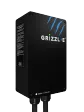 8.4Price tier: Budget, under $350Check price
What size breaker does an EV charger need? The short answer: take the charger’s maximum amperage, multiply by 1.25, and that’s your minimum circuit size. A 40-amp charger needs a 50-amp breaker; a 48-amp charger needs a 60-amp breaker. The rest of this guide covers why, what wire goes with it, and what to do when your panel can’t fit the answer.
This is general guidance based on the National Electrical Code (NEC), not a substitute for a licensed electrician. Local amendments vary — your electrician’s load calculation is the final word.
The 125% rule (why chargers need oversized breakers)
EV charging is a continuous load: the car draws maximum current for 3 or more hours every night. Sustained current generates sustained heat in wires, terminals, and breakers. The NEC’s answer is a 25% safety margin — size everything as if the load were 25% bigger:
Charger amps × 1.25 = minimum circuit amps
| Charger output | × 1.25 | Breaker you install |
|---|---|---|
| 16 A | 20 A | 20 A double-pole |
| 24 A | 30 A | 30 A double-pole |
| 32 A | 40 A | 40 A double-pole |
| 40 A | 50 A | 50 A double-pole |
| 48 A | 60 A | 60 A double-pole |
| 50 A | 62.5 A | 70 A double-pole |
Equivalently, a circuit supports 80% of its rating as continuous load: a 50-amp circuit supports 40 amps of charging; a 60-amp circuit supports 48. This is also why NEMA 14-50 outlets cap plug-in chargers at 40 amps — the outlet is the 50-amp circuit’s limit.
Wire sizing: gauge, wire type, and run length
Breaker size is only half the circuit. Wire gauge must carry the current without overheating, and the required gauge depends on wire type and run length:
| Charger | Breaker | Conduit (THHN copper) | Romex / NM-B cable |
|---|---|---|---|
| 32 A | 40 A | 8 AWG | 8 AWG |
| 40 A | 50 A | 8 AWG | 6 AWG |
| 48 A | 60 A | 6 AWG | 4 AWG |
Why two columns? Romex cable assemblies are limited to the NEC’s 60°C temperature rating, so they need thicker wire for the same current. THHN in conduit uses the 75°C column and can run one size smaller.
Two gotchas worth knowing:
- Long runs need upsizing. Runs over ~100 feet should go one wire size larger to control voltage drop — a 48-amp charger on a long run may need 4 AWG even in conduit.
- Charger lug limits. Some chargers physically can’t accept wire thicker than 6 AWG, which makes Romex a poor choice for 48-amp installs. Check the charger’s install manual before the electrician buys wire.
Hardwired
An electrician wires the charger straight to a dedicated breaker. Required for 48 A+ (60 A circuit).
✓ Max power (48–50 A); cleanest look; required by some rebate programs
✕ Electrician required; charger stays with the house
NEMA 14-50 plug
The charger plugs into a 240 V outlet, like a dryer outlet. Caps at 40 A continuous on a 50 A circuit.
✓ DIY-friendly; take the charger if you move; cheaper install
✕ 40 A max; the outlet must be industrial-grade (not a cheap dryer outlet)
Deep dive: hardwired vs plug-in and panel capacity checker.
GFCI: what the code actually requires
This trips up (pun intended) a lot of installs:
- NEMA 14-50 outlet installs: current NEC requires GFCI protection on the outlet. Outdoors, always.
- Hardwired installs: generally no separate GFCI breaker needed — modern chargers have internal GFCI protection. Stacking an external GFCI breaker on top often causes nuisance tripping, where the two GFCIs fight each other and the charger randomly stops.
- Local amendments vary. Some jurisdictions require GFCI on everything. Your electrician knows your local code — this is exactly the kind of detail you pay them for.
When your panel can’t fit the breaker
This is where most “what size breaker” searches actually end up. Before you price a $2,000–$4,000 panel upgrade, you have three cheaper outs:
- Turn the charger down. Nearly every 48-amp charger is adjustable — via app (EVIQO, Emporia, ChargePoint, Tesla), DIP switches (Grizzl-E Classic, no app needed), or installer settings. A 48-amp charger configured to 32 or 40 amps is perfectly code-compliant on a 40- or 50-amp circuit. You lose some speed; you keep your panel.
- Load management. The Emporia Pro with its Vue 3 home energy monitor watches your whole-house load and throttles charging when the house is busy — delivering up to 48 amps on a panel that couldn’t otherwise support it. This is the legitimate alternative to a panel upgrade.
- Go plug-in at 40 amps. A NEMA 14-50 outlet on a 50-amp breaker fits far more panels than a 60-amp hardwired circuit, installs for less, and still delivers ~25–30 miles of range per hour. See hardwired vs plug-in.
Run the numbers before calling the electrician: panel capacity checker · installation costs and rebates · 40 amp vs 48 amp · how to choose a Level 2 charger.
The electrician conversation: what to ask for
When you call for quotes, the breaker and wire questions are how you tell a good electrician from a sloppy one. Ask these five things, the same way, to every bidder:
- “Will you do a load calculation on my panel?” — Anyone who quotes a 60-amp EV circuit without one is guessing. Walk away.
- “What wire type and gauge are you quoting?” — You want to hear “6 AWG THHN in conduit” or “4 AWG Romex” for 48 amps, not “whatever fits.”
- “Is the quote for a dedicated circuit?” — EV chargers need their own circuit. Sharing with a dryer or RV outlet is a code violation and a fire risk.
- “How are you handling GFCI?” — For hardwired installs, the answer should involve the charger’s internal GFCI and local code, not an automatic GFCI breaker upcharge.
- “Does this include the permit?” — Most jurisdictions require a permit ($100–$300). Unpermitted work can void your homeowner’s insurance if something goes wrong.
Get three quotes. The spread is often 2× between the cheapest and most expensive for identical work.
Future-proofing the wire run
If the walls are open or the trench is dug, consider running wire one size larger than today’s charger needs — the labor is the expensive part, and copper is comparatively cheap. A 48-amp charger needs 6 AWG in conduit today; running 4 AWG costs marginally more in materials and leaves headroom for an 80-amp charger (or a second charger on power-sharing) later without reopening anything.
The same logic applies to conduit: if your electrician is running conduit anyway, ask for the next size up. Pulling thicker wire through existing oversized conduit in five years is a two-hour job; replacing undersized conduit is a two-day job.
Related reading: EV charger installation cost and rebates — including the 30% federal tax credit that covers the electrical work, not just the charger.
Common sizing mistakes to avoid
- Sizing the breaker to the plug, not the charger. A NEMA 14-50 outlet on a 50-amp breaker does not mean you can run a 48-amp charger on it. The charger’s configured output is what matters — 48 amps needs a 60-amp circuit, period.
- Forgetting the 125% rule on “just a little more.” A 40-amp charger on a 40-amp breaker will run — right up until the breaker trips on a hot summer night, or worse. The margin isn’t optional; it’s the code.
- Aluminum wire without checking. Aluminum is cheaper than copper and code-legal for these circuits, but it needs anti-oxidant compound, proper torque, and lugs rated for aluminum. Most residential electricians prefer copper for EV circuits — ask which they’re quoting and why.
- Ignoring the subpanel rating. Adding a 60-amp breaker to a 100-amp subpanel fed by a 60-amp feeder doesn’t work — the feeder is the real limit. The load calculation has to cover the whole chain, not just the panel the breaker sits in.
Verdict
Size the breaker with the 125% rule, size the wire for its type and length, and let the electrician handle GFCI per local code. But treat the breaker size as a starting bid, not a verdict — adjustable amperage and load management mean the panel you have is very often the panel you need.