EV Charger Weather Ratings: NEMA 3R vs NEMA 4 vs IP65, and Which Home Chargers Have Them
Our top picks
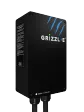 8.4Price tier: Budget, under $350Check price on Amazon
 8.6Price tier: Mid-range, $350–$550Check price
 9.2Price tier: Premium, $550–$750Check price
Open the spec sheet of a home EV charger and you will find one of three kinds of weather claim: a NEMA type such as 3R or 4, an IP code such as IP65 or IP67, or just the words “indoor/outdoor.” They sound interchangeable and they are not. This guide explains what each one actually says, using NEMA’s own enclosure document, then goes through the rating each of 11 popular Level 2 chargers lists, and ends with how to think about whether the rating should change what you buy.
What do NEMA 3R, 4 and 4X mean?
NEMA, the National Electrical Manufacturers Association, defines enclosure types in its Enclosure Types document. The three that matter for a home charger are all constructed for indoor or outdoor use, and all three provide a degree of protection against access to hazardous parts and against rain, snow and sleet. All three are described as undamaged by the external formation of ice on the enclosure.
Type 3R is the baseline. NEMA describes it as protecting against falling dirt, rain, sleet and snow. Type 4 goes further: it adds protection against windblown dust and against splashing water and hose-directed water. Type 4X is Type 4 plus an additional level of corrosion protection. The practical reading is that 3R is built for weather falling on the box, 4 is built for weather and water being thrown at it, and 4X is built for places where salt or chemicals attack the enclosure itself.
One caveat from the document: its comparison tables come from NEMA 250-2003 and the document is dated November 2005. The definitions are old and stable, but a manufacturer’s current claim is whatever its own spec sheet says for the exact model and variant you are buying.
Is NEMA 3R good enough for a charger outside?
For most homes, yes, in the sense that NEMA describes 3R enclosures as built for outdoor use against rain, sleet and snow. A charger on the side of a house under a modest eave, in a driveway with a normal install, is the situation 3R is aimed at. Tesla’s Universal Wall Connector, for example, is listed as NEMA 3R and outdoor rated, with an operating range of -30 C to 50 C in our model data.
The case for stepping up to Type 4 is not rain. It is water that arrives with force or from the side: hose-directed water or splashes, for example from a nearby sprinkler. A Type 4 rating is not permission to pressure-wash a charger. NEMA lists hose-directed water and splashing water for Type 4 and does not for 3R. If any of those describe your wall, the extra rating is a fair thing to want. If your charger sits in a closed garage, neither is likely to matter and amperage, cable length and plug type are better deciding factors.
When does 4X matter?
Type 4X is the answer to corrosion, not to extra water. NEMA says it adds a level of corrosion protection to Type 4. That is relevant if you live close to the ocean, where salt air attacks metal, or if the charger will be somewhere that road salt spray, fertilizer or pool chemicals reach it. In our data, the Grizzl-E Ultimate 48A is the one listing NEMA 4X with an IP67 rating and a cast aluminum enclosure.
Ask the manufacturer whether its corrosion protection suits your installation, including any exposure to salt or chemicals. The enclosure, cable and connector are separate parts, so check the instructions for all of them.
What does an IP code mean, and is it the same as NEMA?
IP stands for ingress protection and comes from IEC Publication 60529. The code is the letters IP followed by two numerals. NEMA explains that the first numeral indicates the degree of protection for persons and solid foreign objects entering the enclosure, and the second indicates protection against the harmful ingress of water. The exact meaning of each digit is defined in the IEC standard, so read the digits as a pair and not as one score.
NEMA is careful about the comparison in its own document. It says IEC 60529 does not specify protection against conditions such as condensation, corrosive vapors, fungus or vermin, while the NEMA standard tests for environmental conditions such as corrosion, rust, icing, oil and coolants. Because the tests are not identical, it says the IEC designations cannot be exactly equated with NEMA type numbers. NEMA offers a one-way conversion from NEMA types to IP designations, since NEMA types meet or exceed the associated IP test requirements, and warns that it cannot be used to go the other direction.
That one-way rule is the useful takeaway. A product that is IP65 is not thereby NEMA 4, and a product that is NEMA 4 is not thereby limited to one IP code. When a spec sheet lists both, as the Grizzl-E and EVIQO units do, it is the manufacturer’s claim for both systems. When it lists only one, do not guess at the other.
Which home chargers list which rating?
These ratings come from the manufacturer or retailer details compiled in our model data as of October 10, 2026. Variants differ, so confirm on the current spec sheet.
Tesla’s two wall connectors take the 3R approach. The Tesla Universal Wall Connector is listed as NEMA 3R and outdoor rated from -30 C to 50 C, and the older Tesla Wall Connector Gen 3 is listed as approved for indoor and outdoor use with a NEMA 3R-type enclosure. ChargePoint’s Home Flex says UL listed for indoor and outdoor, which is a safety listing and does not name a NEMA type in our data.
The Grizzl-E family goes the other way. The Grizzl-E Ultimate 48A is NEMA 4X and IP67, the Grizzl-E Classic is NEMA 4 with IP67, and the Grizzl-E Duo is NEMA 4 with IP67, all with cast aluminum cases.
Several others list NEMA 4 with indoor/outdoor use: the Emporia Pro, the Autel MaxiCharger AC Home and the Wallbox Pulsar Plus. The EVIQO Gen 2 lists NEMA 4 and IP66. The Lectron V-BOX Pro is the one to read carefully: it lists an IP65 enclosure but a lower IP54 for the coupler, the part that plugs into the car. That split is a good example of why one headline number can hide a different one for a different part.
How should the rating affect my choice?
Start with where the unit will live. An interior garage wall makes the rating a tiebreaker. For outdoor use, check the manufacturer’s permitted installation locations. NEMA 4 lists hose-directed and splashing water protection, while 4X adds corrosion protection. Neither rating overrides the manufacturer’s cleaning or mounting instructions.
Then look at climate beyond rain. Tesla lists an operating temperature range, which tells you something a NEMA type does not.
Finally, remember the rating belongs to the enclosure as the maker tested it. It assumes proper installation: correct conduit fittings, a sealed knockout and the mounting position the instructions describe. Water that gets in through a poorly sealed conduit entry is not covered by a rating on the box. Follow the installation instructions for your model, and ask your electrician to do the same.
Our guide to choosing a Level 2 charger covers amperage and plug type, and the hardwired vs plug-in comparison covers how the install route affects where a unit can go.
Common questions
What is the difference between NEMA 3R and NEMA 4? Both are for indoor or outdoor use and protect against rain, sleet and snow, and both are undamaged by external ice. Type 4 adds protection against splashing water and hose-directed water and windblown dust, where 3R lists falling dirt.
Is a NEMA 3R charger fine outdoors? NEMA describes 3R enclosures as constructed for indoor or outdoor use with protection against rain, sleet and snow. Follow the installation instructions for the model.
What does NEMA 4X add? Corrosion protection on top of Type 4, per NEMA.
Does IP65 equal NEMA 4? No. NEMA says IP designations cannot be exactly equated with NEMA types because the tests differ.
Do I need a rated charger in a garage? An indoor/outdoor rating gives flexibility if the unit might end up on an exterior wall or open carport. Check where the manufacturer says your model can be mounted.
Related reading
For the buying side, see the best Level 2 EV chargers of 2026, installation cost and rebates and what size breaker an EV charger needs.
Bottom line
NEMA 3R covers rain, sleet and snow, NEMA 4 adds splashing and hose-directed water, and 4X adds corrosion protection. IP codes are a separate system and do not convert cleanly to NEMA. Match the rating to the wall the charger will actually sit on, read the spec sheet for your exact model, and check today’s price before you buy.