EV Charger Tax Credit 2026: What Happened to 30C and What to Do Before Year-End
Our top picks
 Utility-rebate friendly: shows up on approved lists often; 50 A, plug-in or hardwired, ~$500-600ChargePoint Home Flex50 A · 12 kW · 23 ft · J17729.0Price tier: Mid-rangeCheck price on Amazon
 Tesla households: 48 A, hardwired, NACS only, ~$440-475Tesla Wall Connector (Gen 3)48 A · 11.5 kW · 24 ft · NACS8.9Price tier: Mid-rangeCheck price
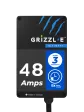 Rugged value: 48 A, NEMA 4X, J1772 or NACS, ~$480-650Grizzl-E Ultimate 48A48 A · 11.5 kW · 25 ft · J17728.7Price tier: Mid-rangeCheck price
If you searched for the EV charger tax credit hoping to claim it before the year ends, here is the short, unwelcome answer: for a charger installed from now on, the federal credit is gone. The section 30C Alternative Fuel Vehicle Refueling Property credit cannot be claimed for charging equipment placed in service after June 30, 2026. Plenty of articles written before that change still say to hurry up and install before December 31. They are out of date.
That does not make this page useless. Some readers installed a charger earlier this year and can still claim the credit. Others are choosing a charger now and want the best remaining way to save. This guide covers both, in plain terms. It is not tax advice, and the rules can change, so confirm your situation with a tax professional and the current IRS instructions for Form 8911.
What happened to the 30C credit?
The credit was created to encourage home and business charging. For years it ran through 2032. The IRS instructions for Form 8911 say P.L. 119-21, commonly known as the One Big Beautiful Bill Act, changed the termination date from December 31, 2032, to June 30, 2026. The instructions are explicit: you cannot claim the credit for property placed in service after June 30, 2026. Our installation cost and rebates guide reports the same cutoff, and it cites IRS Publication 6027.
Two details trip people up:
- The deadline is about when the charger is in service, not when you bought it. The IRS says property is generally placed in service when it is ready and available for its specific use. For a charger at your principal residence, the instructions give the example that it is placed in service when it is operational. Ordering in June and finishing the install in August does not meet the deadline.
- “Before year-end” is no longer a rule. An install finished on December 15 is after June 30, so the credit does not apply, even though it falls in the same tax year.
Who can still claim it?
You may still be able to claim the credit on your 2026 return if all of these were true:
- The charger was placed in service between January 1 and June 30, 2026.
- It was installed at your main home (for personal-use property).
- The original use of the property began with you, and it is not used predominantly outside the United States.
- It was placed in service in an eligible census tract.
The residential amount, per the IRS instructions, is 30% of the cost of the property, limited to $1,000 for each single item of qualified refueling property. For depreciable business or investment property the rules differ: the credit is 6%, or 30% if prevailing wage and apprenticeship requirements are met, capped at $100,000 per item. If you used the charger for a business, talk to a tax professional rather than guessing.
A few more points from the instructions worth knowing:
- The personal credit is not refundable. The instructions say that if you cannot use part of the personal credit because of the tax liability limit, the unused credit is lost and cannot be carried back or forward.
- Basis reduction. Unless you elect not to claim the credit, you reduce the property’s basis by the credit amount.
- Recapture. If the property no longer qualifies, you may have to recapture part or all of the credit.
- A permit number may be requested. Schedule A has a line for a local or state certification or permit number, if one applies. Keep your permit paperwork.
The credit is claimed on Form 8911 with a Schedule A for each item of property. Use the revision the IRS directs for your tax year.
The census tract rule
This is the requirement most people miss. For property placed in service after 2022, the property is not qualified unless it was placed in service in an eligible census tract. The IRS instructions say to use your address with the Census Bureau’s 2020 Census Tract tool to get the 11-digit tract GEOID, then search for it in Appendix B, the IRS list of eligible tracts. If your tract is not on the list, you cannot claim the credit for that property.
The practical step: if you installed this year and expected a credit, look up your tract before you plan around it. Do not assume that a charger in any home qualifies.
Documents to gather if you installed before July
If you think you qualify, assemble these now so filing season is easy:
| Document | Why it matters |
|---|---|
| Itemized electrician invoice (charger, parts, labor) | Establishes the cost of the property |
| Proof of the date the charger became operational | Placed-in-service date must be on or before June 30, 2026 |
| Permit and inspection record | May supply the certification or permit number requested on Schedule A |
| Address and census tract GEOID | Needed to confirm eligibility |
| Utility rebate paperwork | May affect the cost that counts; ask your tax professional |
If your tax situation is complex, or you used the charger for work, ask a tax professional before filing. We cannot confirm anyone’s eligibility.
What to do if you are installing now
For a charger that will be placed in service after June 30, 2026, plan the budget without a federal credit. Our installation guide puts the charger itself at roughly $350-600 and a simple panel-adjacent install at $300-800, with longer runs and panel work costing more. Here is where savings still come from.
Utility rebates. Many utilities offer rebates, often a few hundred dollars, or discounted Time-of-Use rates. Two cautions we repeat in our rebates guide: some programs only cover specific charger models, and some require enrollment before purchase or installation. Read the terms first.
State and local programs. Some states, cities and electric cooperatives run their own incentives. We cannot list them reliably here, because they change often. Search your state energy office and your utility’s EV page.
Off-peak rates. Where Time-of-Use pricing exists, overnight charging can cost much less than daytime charging. Over a year of driving, that can outweigh a typical rebate. Our home charging cost guide and the EV vs gas cost tool model your rates.
Keeping the install cheap. Mount near the panel, consider a plug-in charger, right-size the amperage, and get two or three quotes. Quotes for identical work can differ by 2x. See hardwired vs plug-in, and use the panel capacity checker before you hire anyone.
Install timing: what actually matters before year-end
If you do not need the federal credit deadline, what does the calendar still matter for?
- Utility rebate deadlines. Some programs run on annual budgets or have enrollment windows. Ask whether yours closes at year-end or funds run out.
- Electrician availability. Winter weather and holiday schedules can stretch lead times. Book quotes now if you want the charger for a new EV delivery.
- Permits and inspections. These can take longer than the install itself in some jurisdictions. Ask early.
- Weather. Outdoor trenching and exterior work are harder in frozen ground. If your run is outdoors, discuss it with the electrician.
- A new EV in your driveway. If you are buying a car, a charger that is not ready means slow Level 1 charging. Our how to choose guide and the charge time calculator help you decide how much power you need.
None of these are tax deadlines. They are practical ones.
Which charger should you consider?
Choose for your car, panel and install first. Prices below are ranges from our model data as of October 10, 2026, so check today’s price before you buy.
ChargePoint Home Flex: the rebate-friendly pick. 16-50 A output (up to 12 kW), plug-in or hardwired, UL listed for indoor and outdoor, 3-year warranty, about $500-600. Our rebates guide notes it appears on approved utility lists often, but confirm your own utility’s list. Choose the right connector listing, because the J1772 and NACS versions are separate. Check the current price on Amazon · Full review
Tesla Wall Connector (Gen 3): for Tesla-only garages. 48 A (11.5 kW), hardwired only, NACS only, 4-year warranty, about $440-475. Non-Tesla cars need an adapter. If other EVs may visit, look at the Universal Wall Connector instead. Check the current price on Amazon · Full review
Grizzl-E Ultimate 48A: rugged and good value. 16-48 A, NEMA 4X cast-aluminum enclosure, app with scheduling and load balancing, J1772 or native NACS, 3-year warranty, about $480-650. Hardwired only. Check the current price on Amazon · Full review
Our best Level 2 EV chargers of 2026 ranking covers the others, and the Tesla vs ChargePoint vs Grizzl-E comparison puts these three side by side. For connector questions, see NACS vs J1772. For circuit sizing, see what size breaker for an EV charger.
Should you wait for Black Friday?
Black Friday 2026 is November 27. We have not verified any 2026 EV charger offers, and our Black Friday guide records only what happened in 2025: a modest $50 cut on the Tesla Universal Wall Connector and no cut for the standard model in the report we cite.
Since there is no tax deadline pushing you, waiting a month for a possible sale is reasonable if you are not in a rush. Write down today’s price, check your utility’s rebate rules first, and remember a discount covers the charger, not the electrician. If a rebate requires a specific model, buy that model, not the cheapest one.
Common mistakes
Assuming the credit still exists. Older articles say install by December 31. For new installs, that is wrong.
Confusing purchase date with in-service date. The date that matters is when the charger was operational.
Skipping the census tract check. An eligible install still has to be in an eligible tract.
Buying a non-qualifying charger for a rebate. Check the utility’s model list first.
Treating this page as tax advice. It is not. Confirm with a tax professional and the IRS instructions.
The bottom line
The federal EV charger credit stopped applying to chargers placed in service after June 30, 2026. If yours was operational by then, you may still be able to claim it on Form 8911, subject to the main home, census tract and other rules, so collect your paperwork and ask a tax professional. If you are installing now, focus on utility rebates, state programs, off-peak rates and a smart install. The charger is the cheap part, and the installation is where the budget is won. Our how to choose guide is the next read.
Frequently asked questions
Is there still a federal tax credit for installing an EV charger?
Can I still claim the credit for a charger I installed earlier in 2026?
How much was the residential EV charger credit?
What counts as the date the charger was placed in service?
Does my address have to be in an eligible census tract?
What can I do instead if my charger is not eligible?
Sources
- IRS: Instructions for Form 8911 (12/2025) · checked 2026-10-25 — Credit cannot be claimed for property placed in service after June 30, 2026 (P.L. 119-21 changed the termination date from December 31, 2032); personal-use credit is 30% of cost up to $1,000 per item; main home, original use, eligible census tract and placed-in-service rules; unused personal credit cannot be carried back or forward
- IRS Publication 6027: Alternative Fuel Vehicle Refueling Property Credit (Rev. 6-2026) · checked 2026-10-23 — Section 30C credit applied to eligible property placed in service January 1, 2023 through June 30, 2026; not claimable for property placed in service after June 30, 2026
Get new guides by e-mail
One short e-mail when EV Charger Reviews publishes a new guide. No spam, no sharing your address, and you can unsubscribe in one click.